
- Spider in Orange Juice by Ace Boggess
- Stopped By a Cop by John Grey
- A Year Ago by Shontay Luna
- What is Growing? by Vanessa Vicario
- What it Means to Have a Cat by Jean Liew
- Cat by Peycho Kanev
- ‘Feeling’ Displaced by Kinsey Krachinski
- Napkin Poem by Corey Mesler
- Hart by Peter Mladinic
- Diphthong by Bruce Morton
- At Last by David Lewitzky
- Beneath the Old Pine Tree by Nina Gajdosikova
As a wedding and portrait photographer based in the Poconos, PA, Alyssa Fell is passionate about creating beautiful, timeless images that tell a story and capture the unique personalities and emotions of clients. She approaches each session with a keen eye for detail, dedication to quality, and a commitment to making sure people feel comfortable and confident in front of the camera. Find her at https://www.alyssafphotography.com

Sometimes it’s nice to have a good mix. A playlist on shuffle, a diverse selection of films for movie night, or a bag of assorted Halloween candy can make a big difference. I think this month’s issue is just that: a good mix. Normally I see themes and threads running throughout an issue, but this one seems to have a little bit of everything. We have some political poems, some medical poems, some cat poems, some relationship poems. Read them in order or totally at random. Go ahead, reach into the bag and see what kind of tasty treat you pull out. I dare you.


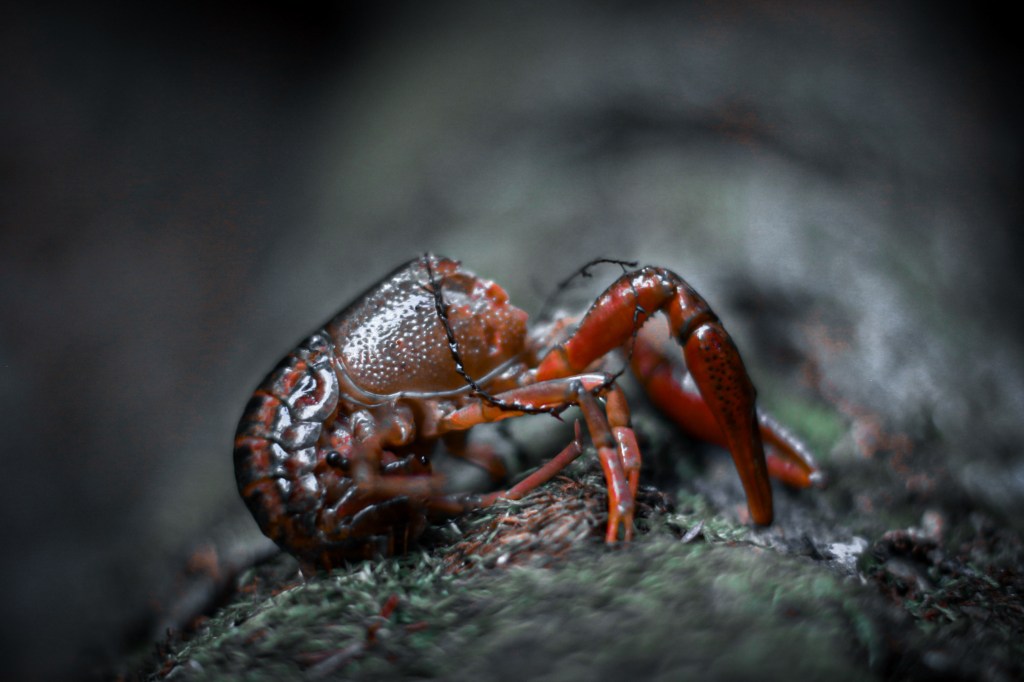
Legs appear first during the pour
as dark lines above the Florida logo
on an otherwise translucent mug—
Florida full of horrors:
alligators, weirdos, ex-presidents.
I startle & step back, too late
to stop envelopment.
The spider—nickel-sized, dark—
does the breaststroke, flailing,
black on bright like a sunspot
or eclipsing minor moon.
Mesmerizing as a lava lamp
how these two images contrast:
one life, the other death, but which?
I watch, but soon must dump the juice
to save what’s left of the morning.
Ace Boggess is author of six books of poetry, most recently Escape Envy. His writing has appeared in Indiana Review, Michigan Quarterly Review, Notre Dame Review, Hanging Loose, and other journals. An ex-con, he lives in Charleston, West Virginia, where he writes, watches Criterion films, and tries to stay out of trouble. His forthcoming books include poetry collections, My Pandemic / Gratitude List from Mōtus Audāx Press and Tell Us How to Live from Fernwood Press, and his first short-story collection, Always One Mistake, from Running Wild Press.


Cops says,
“Hey you!”
thinks he’s caught the culprit –
I don’t carry a weapon
but feel free to take up my time –
it seems like habit with you
sure check my pockets
my eyes
my hair
my socks
my underwear
my underarms
my fingernails –
I must be guilty somewhere
John Grey is an Australian poet, US resident, recently published in New World Writing, River And South and The Alembic. Latest books, “Bittersweet”, “Subject Matters” and “Between Two Fires” are available through Amazon. Work upcoming in Paterson Literary Review, White Wall Review and Flights.



They stormed,
on what everyone
thought would be
a regular morning.
They stormed,
because they were
allowed to. They
were let through,
permitted to swell
in numbers that
splintered wood
and shattered glass.
They were downright
joyful, the united
populace full of
random, righteous
chants. Smiles laced
in pride and boundless
boasting. Storming
through on a rampage
focused on willful
destruction
and defecation.
They did many
things that early
January morning.
Because, among
other reasons, only
THEY could. If they
were anyone else,
they would’ve never
made it off the sidewalk.
Shontay Luna is the author of four books. Writing credits include appearances in Misfit Magazine, Blue Lake Review and Brittle Paper. Majoring in Poetry for two years at Columbia College Chicago, she remains there with her pens and notebooks. Her published work is on Instagram – @shontayluna


I want to paint it all black, create a darkling. Yet my flowers bloom into what’s lacking
Sprouting off shoots like basketball shots
All net, all swoosh, like winning at the slots
A rose is a rose is a rose
I am who I am. I died but I rose
A resurrection of my body I suppose
And here my soul sings solely, soulfully
Just for kicks in this game of monopoly
Planning a plot to own the electric company
Then the boardwalk and the railroads also
To have it all, is that not an American motto?
Hello Gulf of America, yet how is this true
When the USA did not settle you.
We are the aliens here; we forget we cement Over burial grounds of others here before us Ancient histories, cultural stories, covered
Up massacres, persecutions, genocide
Yet here we are standing on the top of it all
Safe and secure on the inside just talking air
Blowing up a hydrogen ballon
And not expecting explosions anytime soon
Smell the coffee, he’s no fragrant Hyacinth
Twisted thinking as David Bowie’s labyrinth
An evil goblin king simply cannot win
We must band together and stop him.
Weave wild weeds to twine his actions
Grow green vines to bind his factions
Yes, yes keep jumping this rope
Yes, we can do it! Do not lose hope!
Vanessa Vicario, born 1977, has been writing poetry since age 11. She is a 1995 graduate from Bangor Area High School, a 2001 graduate from Kutztown University (B.S. Psychology) and a 2004 graduate from The University of Pennsylvania (M.S.W., Master of Social Work) Vanessa is currently residing in Bangor, PA with her two children, Tazio and Tatiana. Her work may be viewed at https://www.facebook.com/VioletteSunshineArt/
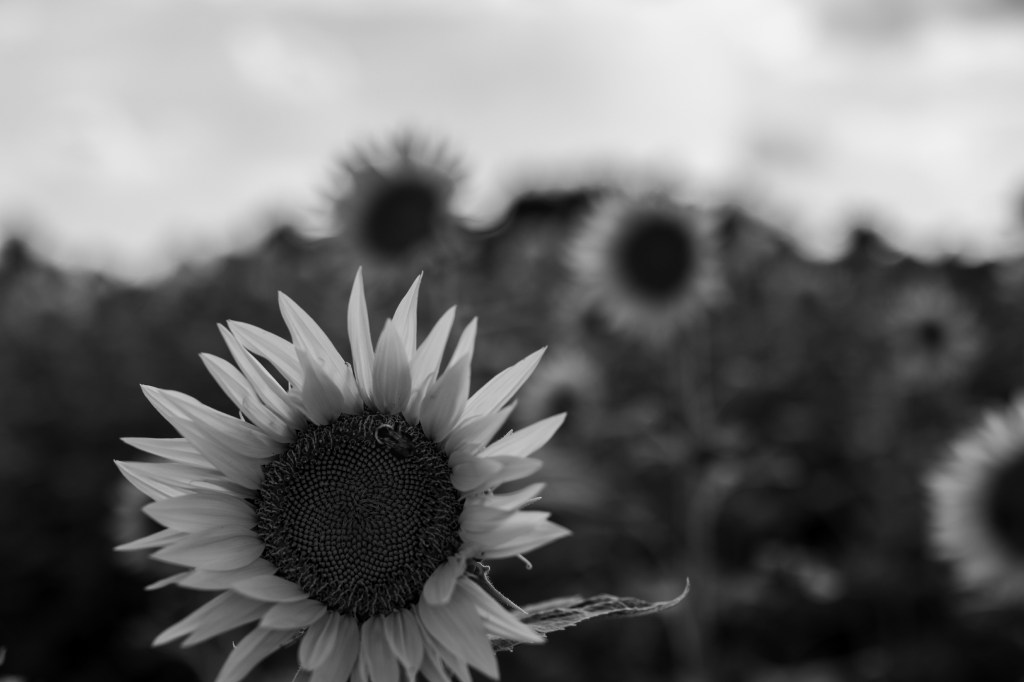


On the sunny wood deck
In Galveston, you find
A tawny creature with alert ears
And question mark tail
Willing to rub her face on your shoes
But not quite come home with you
With deli slices, cheese, canned meats
Before exams, after hours
Until one day, in a bundle
You deposit her in a box house
And she’s yours in the green house
In the Far West house
On a plane to Pacific Northwest
Where you grant her a brother
And mountain views
And travels and travails
And late nights, and more flights
And weekends away
She hides in the corner
Hisses in displeasure
Curls in her bed in cold winter
With the roll of years
Her tipped ears remain raised
But at some point
Her huntress skills wane
She starts to warm to others
She naps on the bed
On the couch, at your feet
Until: you grow slower, more hesitant
Thinner despite the broths
Fur thinned and lackluster
And I knew time did not spare you
Any more than those in the unit
Whose every lab I trended
But for you, it wouldn’t do
So in the end
On your last day
It was just like our first
In your new bed
A warm basket in the sun
Resting at my feet as I worked
No longer a student
But the person I’d aimed to be
When you first ate from my hand
Then I sang you to sleep
The same Dirtbag song from before
And it was the last you knew
Like the Romans I called
Your name three times
The way I told the time of death
In the night at work
And I don’t know if you
Need a coin to cross the river
In Blackwater Woods in April, I let you go
Jean Liew is a rheumatologist and clinical researcher at Boston University Chobanian & Avedisian School of Medicine and Boston Medical Center.


She won’t stop pressing the capital “P”
on my old electric typewriter.
Then she pulls out the sheet, crumples it,
and starts playing with it on the floor
in front of the TV,
like a cat.
Then she smiles at me,
while the Christmas lights twinkle,
pours me a glass of vodka, takes my hand,
and we go out on the balcony and watch
the snow falling under the moon.
She does all those little things
that stop the erosion of the soul and make time laugh,
and forget about us, if only for a little while.
Peycho Kanev is the author of 12 poetry collections and three chapbooks, published in the USA and Europe. His poems have appeared in many literary magazines, such as: Rattle, Poetry Quarterly, Evergreen Review, Front Porch Review, Hawaii Review, Barrow Street, Sheepshead Review, Off the Coast, The Adirondack Review, Sierra Nevada Review, The Cleveland Review and many others.

Displacement is weaved all throughout American history
in immigrants, homelessness, communities
Imagine feeling displaced from yourself
you have been serving others like a blue collar worker
in a capitalist society
Imagine feeling so, so deeply
that you are displaced from everyone around you
just because you didn’t get the social cues right
You set boundaries and suddenly no one wants you
that’s how infantilization starts
They think you should just accept everything thrown at you
if not, you’re yelled at or told you’ll never be good at anything
The lack of empathy for differences never fails to terrify me
but somehow neurodivergent people have to be people-pleasers
“You have to go to this campus”
Removed from home where my first true friends are
You come back at events after graduation
You realize how much time passes when students who come
stare at you blankly.
Being displaced is a horrific lack of human decency
Feeling displaced means losing yourself and everyone around you
Until you are faced with a ghost-town
Kinsey Krachinski is an incoming Fall 2025 graduate student in the English M.A. program at Indiana University South Bend. She previously earned her Bachelor’s degree in English Education from Purdue Northwest in May 2023. Kinsey worked in Editorial and has had 48 articles about pop culture published. She has helped co-write two children’s books with S.H.I.N.E. and Westville Warriors. Kinsey’s poetry has been published in Everscribe Magazine, Just a Cuppa Lit Literary Journal, Fresh Universe Magazine, Eloquentia Magazine, and South Hall Literary Magazine. Kinsey’s poetry is slated to be published with Furnace, Chartium, and The Chrysanthemum Review. When she is not writing about mental health or self-care, she’s enjoying her time with her family, friends, and boyfriend.


I wrote a poem on a napkin.
The poem was about
Richard Brautigan
because I have become
associated with him
in certain dusty quarters.
The poem was short,
the way he wrote them,
without his wit or his
tragedy. The waitress set
my tea on the napkin.
The poem ran. It now looks like
the face of a loved one
seen through murky ocean waters.
Corey Mesler has been published in numerous anthologies and journals including Poetry, Gargoyle, Lunch Ticket, Five Points, Good Poems American Places, and New Stories from the South. He has published over 50 books of fiction and poetry. With his wife he owns Burke’s Book Store (est. 1875) in Memphis.

Think of the terror
of Hart Crane’s jumping from a ship
into the middle of the ocean;
even drunk, to be out there,
the best to lose conscious ASAP,
unless he wanted to lull
and have the terror fill
his head like Titanic ballroom dancers.
What’s worse,
that or the case of the Benny Hill comic?
Postpartum depressed
she stepped from slate shore into waves,
kept going deeper and never came up,
or back to where a towel lay in sand;
likely she didn’t bring one.
It’s crazy. One reader of The Bridge
is thinking, if not for this poem and a few
others, I wouldn’t care if I died.
On Benny Hill,
along with the comic whose life ended,
Moira Foot, with the dimple in her chin,
was getting it done, beauty, and still is.
For beauty, Moria is like Hart, except
she’s a person and he’s words on a page,
though some say he’s more than that.
Peter Mladinic’s most recent book of poems, Maiden Rock is available from UnCollected Press. An animal rights advocate, He lives in Hobbs, New Mexico, United States.


“Doctor (Doctor), Mr. M.D. (Doctor)
Now can you tell me what’s ailin’ me?”
— The Young Rascals
So, this is how the end begins–by extension,
Apprehension then tension. Alpha arcs to omega.
It does not help knowing that what is begun will run
Its course. Each visit comes with the risk of being
The beginning of the end. There is the dread of
The nervous introduction, awkward at best.
Then the dreaded diagnosis explained with
Requisite excess. Then comes a prognosis (what
In Las Vegas they refer to as the odds of beating
The odds) is offered, which is accepted pro forma,
Informative normative hypnosis–medicinal gibberish.
Gag reflex. Shock it is hard to chew, hard to swallow,
Let alone digest. Cognitive indigestion. Ad nauseum.
Upsetting? You bet.
Bruce Morton divides his time between Montana and Arizona. He is the author of two poetry collections: Planet Mort (2024) and Simple Arithmetic & Other Artifices (2014). A chapbook, Olive-drab Khaki Blues, is forthcoming from FootHills Publishing. His poems have appeared in numerous online and print venues. He was formerly dean at the Montana State University library.


Had an undescended testicle
Removed when I was 13
Left me lopsided and forlorn
A bar mitzvah curse.
Thank you Dr. Kutzman
After more than 70 years
I’ve found it once again
With a band of brother balls
On Testicle Hill
David Lewitzky is a retired social worker/family therapist living in Buffalo, New York. He resumed writing poetry in 2002 after a 35 year hiatus. He has had about 150 poems published in a variety of litmags such as Nimrod, Main Street Rag, Passages North and Seneca Review among others.
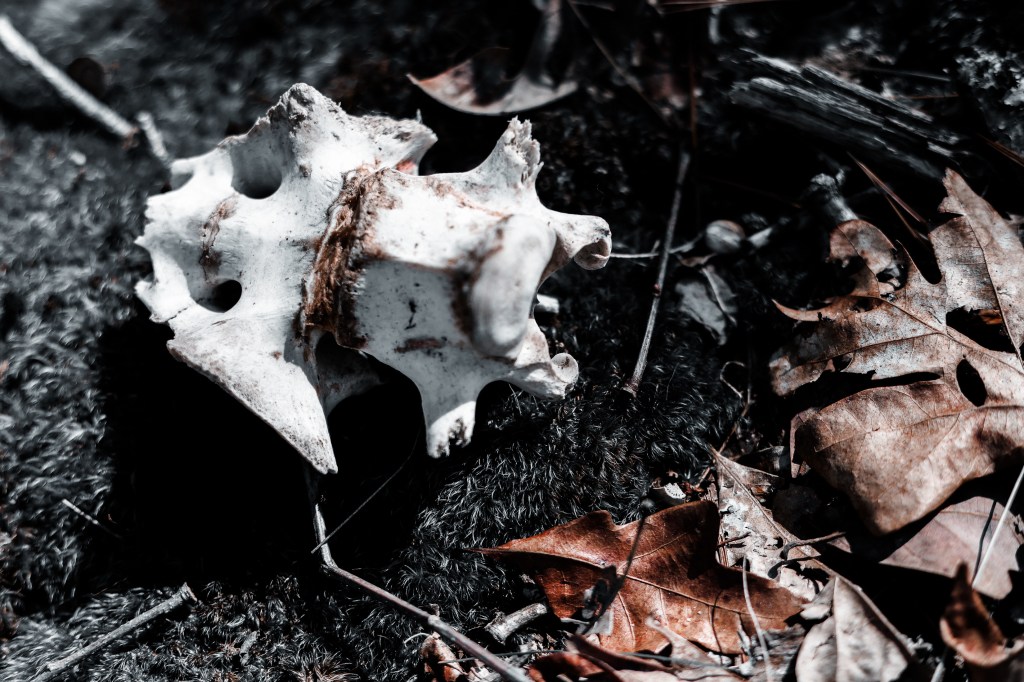

A collection of names and dates
full of pain carved in golden letters
onto the graves that line our path.
Some achingly small or overgrown
their past buried under the weeds.
I imagine the souls we pass watching us
perhaps judging how little we come
to light a candle and speak for a moment
through the veil between us.
Not for too long though
because my voice still shakes
even though your image slowly fades
resting beneath the old pine tree.
I still remember your voice
your hand on my cheek
and I don’t know if you know
the memories of your garden
still bloom in my mind like home
but I hope you feel
the hole you left behind
a fairytale of childhood
that feels so distant now.
Nina Gajdosikova (Guy-doh-she-co-va) is a Slovak bookworm with passion for poetry, fantasy and magical realism. Influenced by a childhood immersed in European folklore and classical fairy tales, she finds home in darker, atmospheric stories and mythological motifs. In the real world, she is a graphic designer focusing on projects in education.

 stickfigurepoetry.com