- To the Deer Who Got Shot Twice on Mulberry Road by John Dorroh
- The Break by Drew Pisarra
- MORNING HEADLINES by Diane Webster
- Barrel of Monkeys by Diane Funston
- Kuala Lumpur by DS Maolalai
- Wait by Craig Kirchner
- Forgive Me by Bart Edelman
- Carousel of Life by Heidi Larsen
- Real Politik by Gary Beck
- New York Down and Dirty by Jack D. Harvey
- Nothing more foolish than a man chasing his hat… by Jason Ryberg
- Re-Ignition by Vanessa Vicario
- To P. by Gabriella Garofalo
- Memento Mori by Clark Zlotchew
Frogg Corpse is a poet, vocalist, and photographer from Louisville, KY residing in Clarksville, Indiana
Frogg joined the International Society of Poets at age eight. Actress Florence Henderson and Pulitzer poet W.D. Snodgrass urged Frogg to continue writing when meeting at a poetry convention in Buena Vista, Florida.
In 2023, Frogg’s poem “The Night Two Lovers Leapt” placed second in the LEO Weekly Literary Edition in Louisville, KY.
Frogg Corpse has published with: Stick Figure Poetry Quarterly, LEO Weekly, Art Nouveau by the San Juaquin Delta College, 48 Hour Books, Red Penguin, Chad M. Horn, Poetry Super Highway, Poetry Global Network, Quintessential Listening, & DeadHaus Press.

As I sense the weather begin to cool and the days grow shorter I feel more and more like cozying up on the couch with a cup of coffee. But every October ushers in my town’s annual book festival, now in its 8th year, and we amp up the pace of our work as we prepare to welcome more than 100 authors, poets and readers to 58 events throughout downtown Easton, PA. I know this doesn’t have anything to do with the current issue of this magazine, but both of these things show me evidence of how important the work of creating spaces and recognizing talent can be. I am honored to be able to showcase this incredible array of poets in yet another amazing issue! I won’t take up any more of your time. You have far better things to read than this note.


Dead deer
on roadside with silver & rainbow
mylar balloon attached to its hoof.
Get well soon reads the card.
This is me. This is me all the way.
Which part is you? she asks.
The part that is the dead deer,
or the intended humor
or lack of humor
or the implied sickness
of some
prankster?
All of the above I tell her.
I mean, it’s a deer, an innocent animal
that because it’s delicate and meaty,
& being evicted from its home is targeted
by a bully audience, armed and bulked-up
on ‘Merika & sassy like they know God
personally.
I mean, because it can’t defend itself,
& it can’t do anything but run,
& then there are all the speeding vehicles
in quiet neighborhoods like mine.
I am the deer & the running & the standing up
to bullies all my life – the corporations with their demands
& they ate my skin & they ate my mother, my father,
& are slowly chewing my sister’s soul,
so subtly, insidiously, delicately bagging unlimited
numbers for mass consumption. Crowds without thick skin
& cerebrums with not enough convolutions to matter.
So little time for the feeble-minded, the frail, the deer
who doesn’t realize the outcome,
simply surviving
only to end up
on some cold country road,
the butt of some fucker’s joke,
the victim of at least two murders.
John Dorroh’s poems are all over the board. He writes about anything and everything. Six of them were nominated for Best of the Net (none of them won) and hundreds of others have graced the covers of fine journals such as Feral, Kissing Dynamite, River Heron, Stick Figure, and Ospressan. When he comes back, he will be a honey bear. Maybe a badger.


The bone snapped
clean
like a salted cracker
or finger and thumb
rubbed together like
crickets’
legs.
A crack
that pierced the air
when what was once one
now is two.
The severing
into a pair
that which should
have stayed whole,
of a piece,
a thing in and of
itself
entirely
transpired.
Drew Pisarra is the author of two radio plays (The Strange Case of Nick M. and Price in Purgatory); two stage comedies (Click and Tea Towels); and two sonnet collections (Infinity Standing Up and Periodic Boyfriends); plus a recent poetry collection that hasn’t a single sonnet in it (Fassbinder: His Movies, My Poems). He is a recent member of Embers and Ashes, the playwrighting lab at Yale Cabaret at Yale University.


The light pole casts
a gallows shadow
across the daybreak roadway.
The street light flickers out
as sunshine brightens,
and the shadow dangles
a severed-head image.
The paper man tosses news
where “If it bleeds, it leads”
headlines roll onto unlit porches.
Diane Webster lives in western Colorado. Her poetry has appeared in North Dakota Quarterly, New English Review, Studio One and elsewhere. Her haiku/senryu have appeared in failed haiku, Kokako, Enchanted Garden Haiku. Five micro-chaps have been published by Origami Poetry Press. Diane has been nominated for Best of the Net and three times for a Pushcart. Diane retired in 2022 after 40 years in the newspaper industry. She was a featured writer in Macrame Literary Journal and WestWard Quarterly. Her website is: www.dianewebster.com

Sometimes I feel the burden
of helping
Its molded into me
Holding my curved hand
out to lift others
They grab on
next thing I’m holding
a whole heavy chain
while they stare blankly ahead
I hold on
in all weather
or any exhaustion
In the clumsiness
of some
who swing and rock
out of ignorance
or malice
It took a decent while
to collect all these
hangers-on
their immovable grins
rigid unbending arms
The ingratitude
of this long line
of plastic motherfuckers
If I make too sudden a move
they will plummet
Then I’ll be blamed
for the mess
on the floor
Diane Funston has been published in journals including Lake Affect, F(r)iction, Tule Review, Still Points Quarterly, among others.
Diane served as Poet-in-Residence for Yuba-Sutter Arts and Culture. Her chapbook, “Over the Falls” was published by Foothills Publishing.
Diane is a visual artist in mosaic, collage, and felting. She has worked with adults and children with disabilities. After leaving hometown Rochester, New York, she lives in California with her husband and two rescue dogs.

the highways run like vines
entwining highrise buildings. raised
on concrete stilts, they stand
above parallel routes, disconnecting
by junctions and tangled: a pile
of dead jellyfish drying out
tentacles, floated
and stranded on a beach. and there is
a structure. and there is nothing
but structure. a city built
of bridges: this is kuala lumpur
where my wife lived for 22 years
before coming home. I can’t imagine living here.
we get everywhere in cars. the city is sunscuffed,
discolouring with heat. this world
like a contractor’s powertool, aged visibly
by hard and careful use, while nature
bucks against it, leaking through openings:
an effervescent leaf and green
drink. 100 years ago, all of it
was timber. one feels it could have landed
out of space. in our apartment there are ants
on the 23rd floor of the building.
we have seen cockroaches. presumably
they’ll never walk on earth. young skinny men
on verges hold implements of labour.
I sit forward in our taxi cab,
my wife and her mother
behind me. I try to understand
and know I can’t.
DS Maolalai has been described by one editor as “a cosmopolitan poet” and another as “prolific, bordering on incontinent”. His work has been nominated fourteen times for BOTN, eleven for the Pushcart and once for the Forward Prize, and released in three collections; “Love is Breaking Plates in the Garden” (Encircle Press, 2016), “Sad Havoc Among the Birds” (Turas Press, 2019) and “Noble Rot” (Turas Press, 2022)

One thing I’m understanding better,
is what has sidled up to me as Wait.
It’s a new friendship, but seems ancient,
comes with coupons, take a number,
and the water here never boils.
Read, some days a lot,
walk a little, some days not.
My mind used to race, now not so much,
Wait doesn’t bide by much movement,
says it’s all about the patience.
Slowly sip your coffee, stick to the towel
and body wash plans. Put all the pillows just so,
don’t watch the news, you can’t handle it,
sit your ass down,
when we’re ready I’ll let you know.
It’s been about two weeks,
he hasn’t let me know.
The thought is, end this relationship,
move on, I’m doing all the work of doing nothing.
Wait always seem to know what I’m thinking,
I wear my antipathy on my sleeve
with a dozen other sayings and cliches.
He gets me a chair, my legal pad
and a favorite pen, I thought was lost,
pours a Jameson neat,
guarantees something is going to happen today,
the tinnitus will go away,
you’ll feel a need, a compulsion,
but only if you apologize
and promise not to bitch about the wait.
Craig Kirchner loves the aesthetics of writing, has a book of poetry, Roomful of Navels, and has been nominated three times for a Pushcart. He has been published in Chiron Review, Abraxas, Main Street Rag and more than 100 others. He houses 500 books in his office and about 400 poems on a laptop; these words help keep him straight. Craig has an interview at Spillword and can be found on Bluesky.

Please accept my apologies.
You know how I crave completion,
But these days I’m too tired.
And when sleep finally arrives,
I need address it,
Embrace the noble gift,
Accept it where I may.
Years ago I would have risen,
No matter what hour of night,
Caught the thought, mid-flight,
Spent my time building a frame
Around the space inside,
So it stood tall and stately,
Before the morning found me.
Then I beamed with admiration,
Approached it from a distance,
Paced through its rooms,
As if I were in a trance,
And the hand of the divine
Softly touched my shoulder.
Now the work must wait,
At least, until daybreak—
A more sensible plan.
Yet should I ever lose
The last house on the street,
Remind me I once lived there.
Bart Edelman’s poetry collections include Crossing the Hackensack, Under Damaris’ Dress, The Alphabet of Love, The Gentle Man, The Last Mojito, The Geographer’s Wife, Whistling to Trick the Wind, and This Body Is Never at Rest: New and Selected Poems 1993 – 2023. He has taught at Glendale College, where he edited Eclipse, a literary journal, and, most recently, in the MFA program at Antioch University, Los Angeles. His work has been anthologized in textbooks published by City Lights Books, Etruscan Press, Harcourt Brace, Longman, McGraw-Hill, Prentice Hall, the University of Iowa Press, Wadsworth, and others. He lives in Pasadena.


I despise Sundays,
The day of shoulds, musts
And have toos.
No respite from
The carousel of life.
The machine keeps running.
The gears keep turning.
Dizzily, I fumble
Through yet another day
Without rest.
And as I turn around,
Another day is approaching;
A Monday, ready to greet.
Tis off to the races,
Out of breath.
We race towards the
Ever lengthening
Mirage of the finish line
With no rest for us
In sight.
Heidi Larsen, M.Ed., is a 4th-grade teacher at a small Christian school in Central Massachusetts. She is a poet and a natural-born storyteller. Her poems have been featured in three Quabbin Quills Anthologies, and showcased in Creative Connections Art Gallery and in The New Dawn Arts Center. She is the author of My Bible- A Daily Prayer Journal. Her words come because they must. They have eeked out, late at night, when no one else was looking. They are her search for meaning, her grief in loss, her faith in a God who will never leave, and the intimate breath that she shares with this world of fragmented people.

When democracy committed crimes
it had been at the instigation,
under the guidance
and for the profit
of the upper classes.
Thucydides – 411B.C.
Strange to think
so long ago
someone knew
who always benefited
from the policy
of democracy,
the lords of profit
devouring the wealth
of the people,
always vulnerable
to the machinations
of the scheming few.
Gary Beck has spent most of his adult life as a theater His original plays and translations of Moliere, Aristophanes and Sophocles have been produced Off Broadway. His poetry, fiction, essays and plays have appeared in hundreds of literary magazines. His traditionally published books include 45 poetry collections, 18 novels, 4 short story collections, 2 collections of essays and 8 books of plays and 16 poetry chapbooks. Gary lives in New York City.

Some people walk
the barrios, the bad areas,
these crowded wicked streets,
these dark and menacing streets,
with a certain step;
no matter what
ken the way, have the means,
have defenses, have no fear, unease
or surmise no abiding danger,
fatal consequence,
vicious attack
of some jack-in-the-box,
a beating by
moon-maddened thugs,
malignant meeting
with some vengeful maniac.
Walking these streets,
others surrender cold turkey,
vox clamantis, to abject fear,
a fear that goes beyond the pale
of ignorance, of frailty
in the face of mayhem.
Look and see
this multifarious sprawl
of latticed streets, the surround of
stoop-ridden slatterns and drunks
punching holes through the fourth wall,
through the musings
of the home-bound banker,
suburbed in bitty splendor;
what does he know
of disorderly and crazy?
Of bumming, begging, stealing,
sniping, brawling;
from quirky aggression
stinking of sweat
or higher than a kite
on parboiled gak?
This damned sorrowful city,
cut up in pieces not alike
for rich and poor.
Where are the steeples
that inspired the Dutch
to dour pride?
The rose-red brick
of blocky orderly buildings?
The clean-swept streets
of old New York?
Hustled away by time
and the march of multitudes.
In truth,
this fabled lush land
of our rapacious forefathers
never was as real
as we make it.
New York! New York!
Gateway to the New World,
metropolis of wealth
side by side
with extravagant poverty;
the light is not for all.
No island gone to hell
but a paradise of vanity,
venality, slum of iniquity,
jagged skyline
of skyscrapers, waiting
to swallow even biblical
Leviathan whole.
Trope of mankind,
overflowing, overflowing,
so many, too many;
jump back;
you’re rabbits by the abyss.
Jack D. Harvey’s poetry has appeared in Scrivener, Valparaiso Poetry Review, Typishly Literary Magazine, The Antioch Review, Stick Figure Poetry, The Piedmont Poetry Journal and elsewhere. The author has been a Pushcart nominee and over the years has been published in a few anthologies.
The author has been writing poetry since he was sixteen and lives in a small town near Albany, New York.

Whoever he may
have been, once, way back in the
long ago, the wind
must have just come along, one
day, and absconded
with his identity and his
social standing all
together, leaving him far
from home and his friends,
and only getting farther
with each passing day,
like a drunk man chasing his
hat off the edge of a cliff.
Jason Ryberg lives part-time in Kansas City, MO with a rooster named Little Red and a Billy-goat named Giuseppe, and part-time somewhere in the Ozarks, near the Gasconade River, where there are also many strange and wonderful woodland critters.
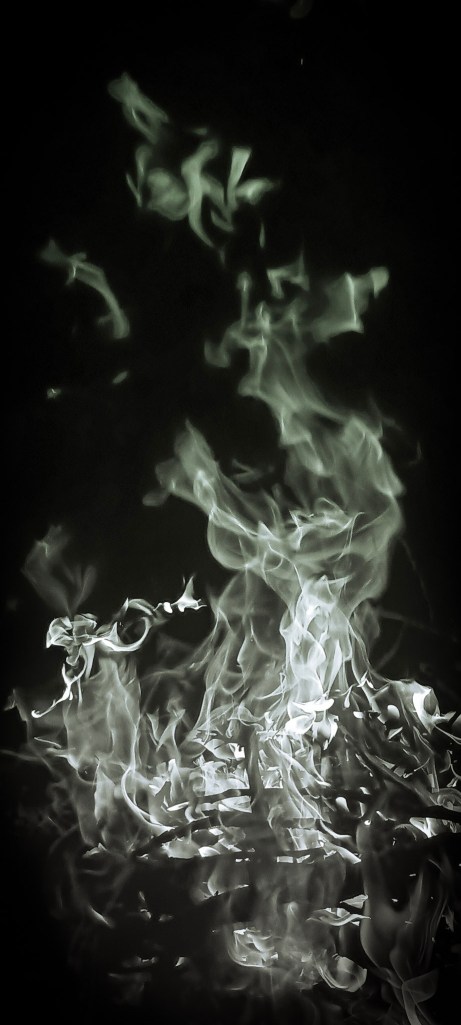

Doll face, painted eye in the moonlight
Fireflies out in the field tonight.
Nightlight bright through the fog
Yet I’m trapped in this thick bog
Wanna get struck by lightning
Crack this Cadbury egg shell open
Leak out all that thick sweet stuffing
Reigniting my porcelain circuitry;
Set my wound up heart on fire!
Light up this blackened night awhile
Just enough to bring back that spark
That intense eruption of glass in the dark
Like a match strikes light into being
My blind doll heart finally seeing
Vanessa Vicario, born 1977, has been writing poetry since age 11. She is a graduate of The University of Pennsylvania (M.S.W., Master of Social Work) and currently facilitates an IOP group for clients with substance abuse disorders. She volunteers with Turning Point of the Lehigh Valley where she mentors a poetry group for domestic violence survivors. Vanessa is currently residing in Bangor, PA with her two children, Tazio and Tatiana. Her work may be viewed at https://www.facebook.com/VioletteSunshineArt/

So what, you’re watching girls dance on the edge of loss,
In the fading light, swaying like wildflowers,
Their limbs blooming worse than bruised petals-
But look closer at their eyes, that blue bruised dusk,
The shear in the rhythm, where there’s a loss that feels
Like breathing, a beat made of blue you can’t hold
While they’re dancing for a heaven that forgot to breathe,
Or hold silence, they’re dancing where the grass meets
The infinite, God who slips through their fingers
A breath away, and there lies loss shrouded
In blue, the blue of lost skies, the blue of a distance
Between hands and stars, where once you held your time,
But left it behind to dance, so no use to you now
Looking
up to the sky, past the hazy moves
Of limbs and light, the shapes against your heavy blue,
Hands tracing loss against hard twilights
If all you’re left with is the sound
Of heels marking time against the void,
A rhythmic loss turning away your mind
While they keep dancing, as you can’t find God
In the silence of shambles or debris,
Only in the way your breath finds its rhythm again,
As loss is but a shade that hardens hues, and in the twirls
Lie prayers born from the salt of harvests
You never planned to sow, the sudden void
Where names can’t live if summer is a she- wolf
Nothing can satisfy, she gets too hungry.
Born in Italy some decades ago, Gabriella Garofalo fell in love with the English language at six, started writing poems (in Italian) at six and is the author of these books “Lo sguardo di Orfeo”; “L’inverno di vetro”; “Di altre stelle polari”; “Casa di erba”; “Blue Branches”; “ A Blue Soul”, “After The Blue Rush”.
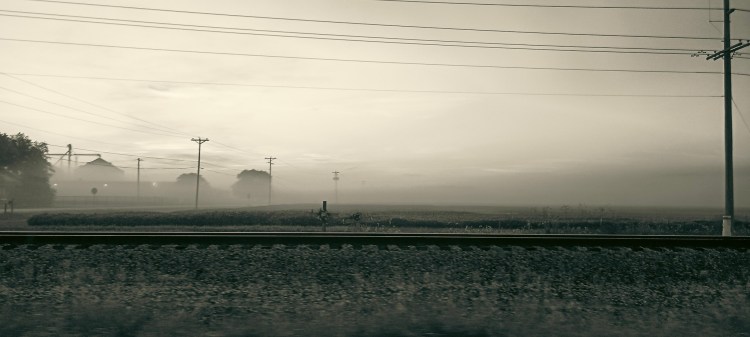

Blasts of steam
Hiss
As they jet
From gloom-enshrouded warships.
Against black velvet firmament.
Vapor puffs gleam white.
Snow white.
Pure white.
They appear clearly.
They appear briefly.
They appear only
To disappear.
Instantaneously!
To become nothing.
No vestige,
No residue.
Clark Zlotchew is the author of 19 books, among them two thriller novels, a poetry collection, and three collections of short stories, one of which was an award winner. His fiction, poetry, CNF, and author interviews (Borges and others) have appeared in Crossways Literary Magazine, The American Poetry Review, Stick Figure Poetry Quarterly, and many other literary journals in the U.S. and abroad.